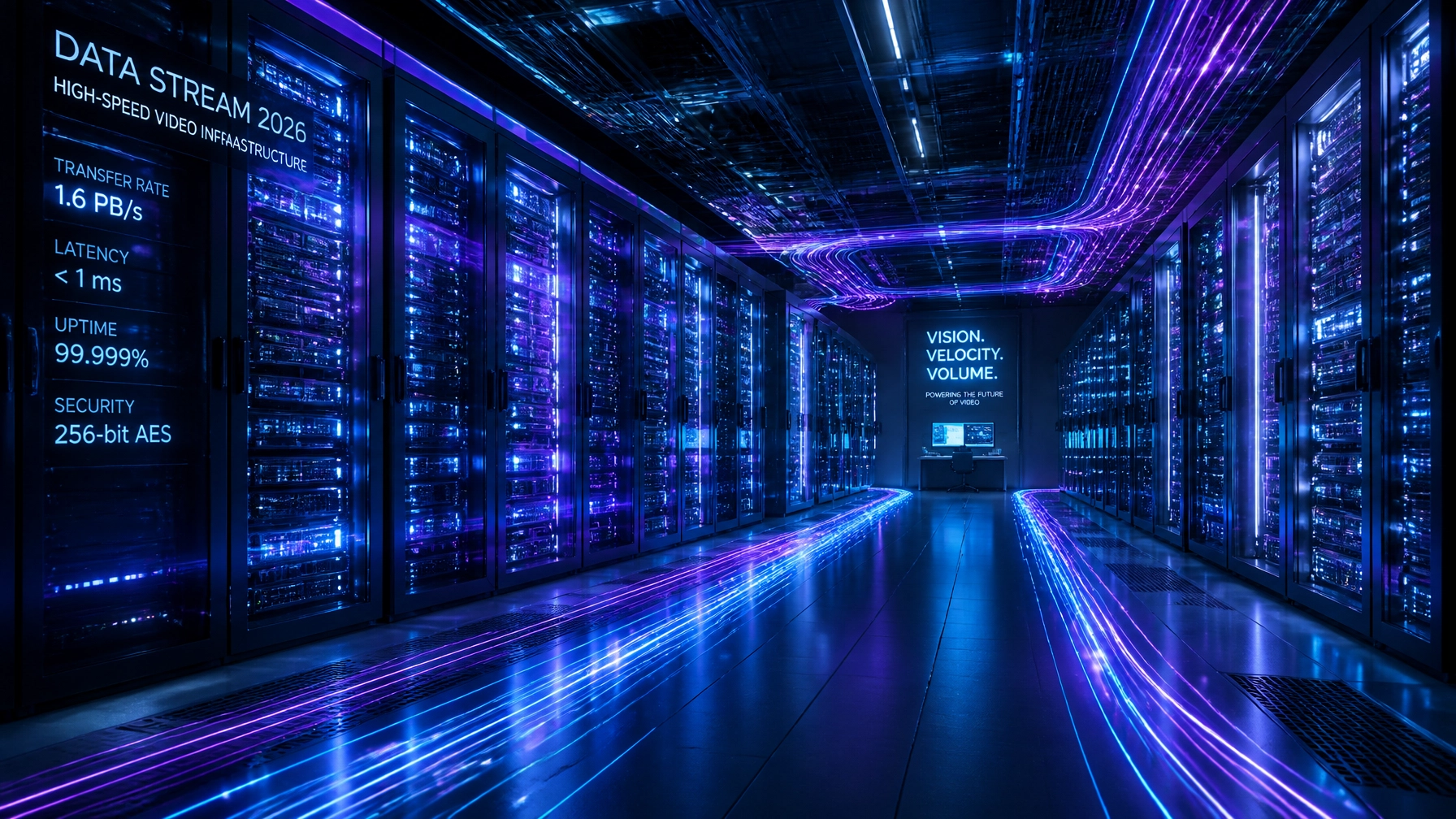
It’s 2026. Fiber-to-the-home is the global standard, 5G is mature, and 6G is already making headlines. For the average consumer, internet speeds have never been higher. So, it’s a fair question: Does video streaming optimization still matter?
If the pipe is bigger, do we really need to worry about how much water is flowing through it?
The short answer is: Yes. More than ever.
In fact, as we push into the era of 8K resolution, spatial computing, and carbon-aware networking, optimization has moved from a "technical nice-to-have" to a core business survival strategy. Here is why the Data Transmission Efficiency Alliance (DTEA) believes efficiency is the most important metric in the 2026 tech stack.
The Bandwidth Paradox: More Speed, Bigger Files
You might think that faster internet solved the buffering problem. But the "Bandwidth Paradox" tells a different story. As network speeds increase, content creators don't just send the same files faster, they send much larger, more complex files.
By 2026, we aren't just streaming 1080p or even 4K. We are entering the world of:
- 8K Streaming: Consuming roughly 30–50 Mbps even with next-gen codecs.
- Spatial Video: High-bitrate immersive content for devices like the Apple Vision Pro and Meta Quest series.
- Live Sports at Scale: Delivering zero-latency, high-frame-rate 4K to millions of simultaneous viewers.
When everyone switches to 8K, even the most robust fiber networks feel the squeeze. Optimization isn't just about making things "small"; it's about making sure these massive data loads don't crash the party.

The Hidden Costs of Inefficiency
For giants like Netflix, Amazon Prime Video, and YouTube, every bit has a price tag. Even a 1% improvement in compression efficiency can save millions of dollars in annual operating costs.
1. Cloud and Storage Expenses
Data doesn't just travel; it sits. Storing petabytes of video at various resolutions across global data centers costs a fortune. Inefficient codecs mean you’re paying for "empty air" in your storage buckets. On platforms like AWS, egress fees, the cost of moving data out of the cloud to the user, are a major line item. Optimization slashes those fees directly.
2. CDN Throughput
Content Delivery Networks (CDNs) have limits. During a major live event, like a World Cup final or a viral premiere, the sheer volume of data can bottleneck even the best CDNs. Efficient data transmission allows providers to serve more users with the same infrastructure.
The Green Imperative: Sustainability as a Metric
In 2026, "Green Streaming" isn't just a PR buzzword; it’s a regulatory and ethical requirement. Data centers and network transmissions account for a significant portion of global energy consumption.
Every gigabyte sent across the internet requires electricity, to power the servers, the cooling systems, and the routers along the way. Companies are now being measured on their carbon footprint per hour of streaming.
Optimizing your video data is one of the fastest ways to hit your ESG (Environmental, Social, and Governance) goals. At the DTEA, we recognize that a lean data stream is a sustainable data stream. By reducing the bitrate without sacrificing quality, we are literally lowering the world’s energy bill.

The Codec War: AV1, VVC, and Beyond
The technology behind optimization is evolving rapidly. We’ve moved far beyond the old H.264 days.
- AV1: Now widely supported by hardware and browsers, AV1 offers massive savings over older standards.
- VVC (Versatile Video Coding): The newest heavyweight, also known as H.266, aims to cut bitrates by 50% compared to HEVC for the same visual quality.
But here is the problem: With so many new technologies, how do you know what actually works? Marketing teams often inflate efficiency numbers, leaving engineers to figure out the truth during deployment.
Why Certification is the New Standard
This is where the Data Transmission Efficiency Alliance (DTEA) comes in. The industry has lacked an independent, "no-nonsense" way to verify efficiency claims.
We are establishing the first independent certification system for video compression and data transmission. Our mission is simple:
- Set Benchmarks: Create clear, repeatable performance standards that reflect real-world 2026 usage.
- Certify Technologies: Rigorously test codecs and transmission tools to ensure they deliver on their promises.
- Recognize Leaders: Award certifications to organizations that achieve superior efficiency.
When a technology carries the DTEA seal, companies like Netflix or Prime Video can trust that the efficiency gains are real and measurable.

Optimization: The Competitive Edge
In the 2026 landscape, optimization is no longer a back-end technical detail. It is a competitive advantage.
- For the CFO: It's about lowering the cost of goods sold (COGS).
- For the CTO: It's about network reliability and scalability.
- For the Viewer: It's about instant start times, no buffering, and the highest possible quality on any device.
If your streaming service is sending more data than it needs to, you are leaving money on the table and making your users wait.
Final Thoughts
So, does video streaming optimization matter in 2026?
As long as we want higher resolution, lower latency, and a more sustainable planet, the answer will always be yes. The companies that win the next decade won't be the ones with the biggest pipes: they’ll be the ones who use those pipes most efficiently.
Are you ready to verify your efficiency? Join the Data Transmission Efficiency Alliance and help us set the standard for the future of data.