If you’ve spent any time in a meeting with a codec vendor lately, you’ve heard the pitch.
"Our new encoder is 50% more efficient than H.264."
"We’ve achieved AV1 quality at half the bitrate of HEVC."
It sounds like a dream for your egress bill. You start doing the math on your AWS or Akamai costs, imagining a 50% reduction in your monthly spend. You might even start planning the ROI for a massive library re-encode.
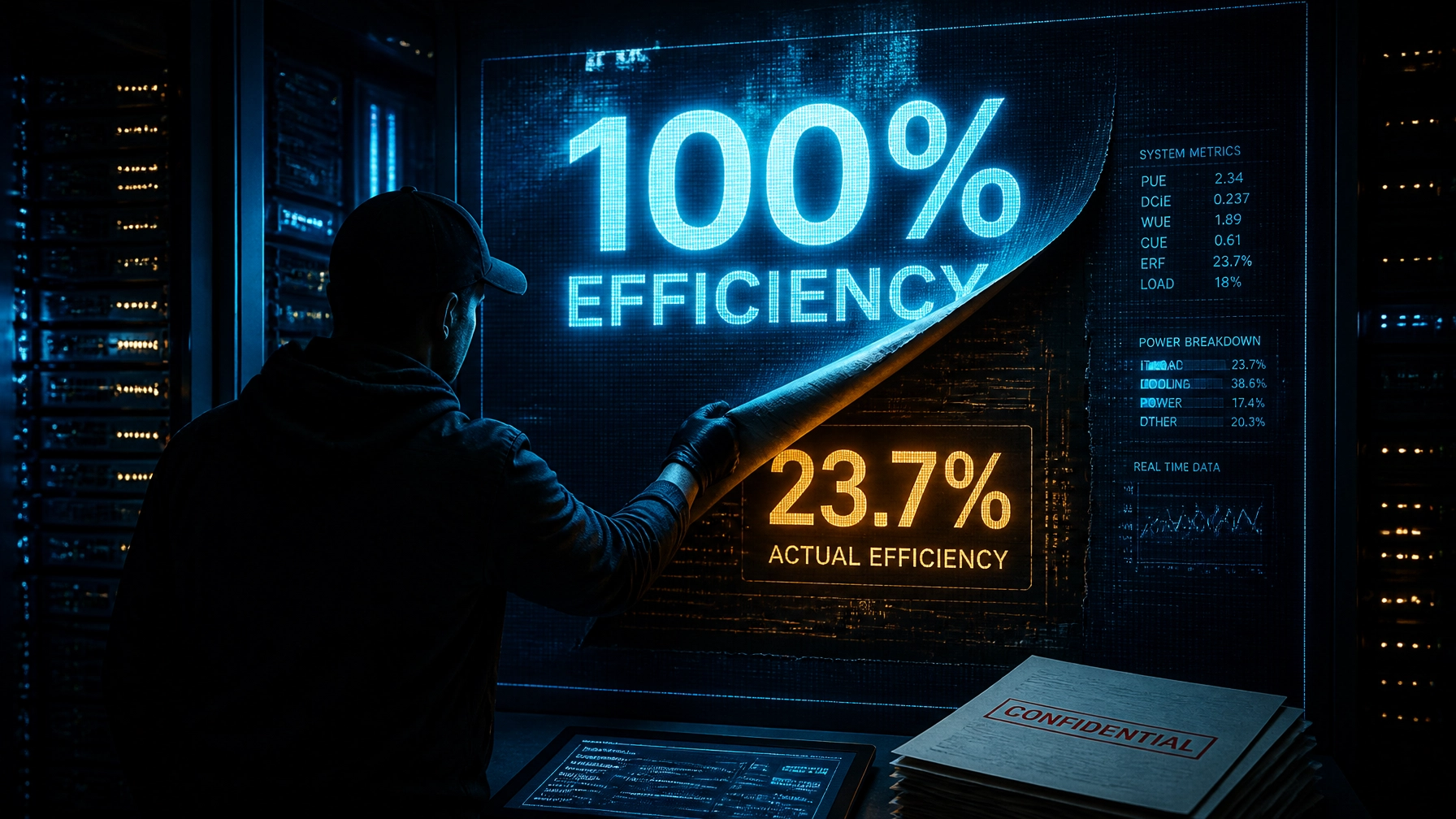
But here’s the reality check from the inside: Those numbers are almost certainly a lie.
In the world of video compression, "efficiency" has become a flexible term that marketing teams stretch until it snaps. At the Data Transmission Efficiency Alliance (DTEA), we see the raw data every day. We know that when a vendor claims a 50% gain, the real-world improvement for a streaming service like Netflix or Prime Video is often closer to 15%: or even 0% when you factor in the massive increase in compute costs.
It’s time to pull back the curtain on how codec vendors rig the game and why the industry desperately needs an independent, cold-blooded certification system.
The "Weak Baseline" Gambit
The oldest trick in the book is choosing a "weak baseline" for comparison.
When a vendor says their encoder is 40% better than x264 (the industry-standard open-source H.264 encoder), they rarely tell you which version of x264 they used or what settings were applied.
A common tactic is to compare the vendor's highly-optimized, "Placebo" preset (which takes hours to encode a single minute of video) against an unoptimized, "VeryFast" preset of x264. It’s the equivalent of racing a Ferrari against a Honda Civic that has its parking brake engaged.
In a fair fight: using similar compute budgets and optimized settings for both: the "massive" gap usually shrinks to a rounding error. Independent researchers like Jan Ozer at the Streaming Learning Center have repeatedly shown that while new standards like HEVC and AV1 are better, the "50% savings" headline is a laboratory anomaly, not a production reality.
Cherry-Picking Content: The "Talking Head" Trap
Video compression is easy when nothing is moving. If you encode a video of a person talking in front of a static white wall, almost any modern codec will look spectacular at a low bitrate.
Vendors love to run their benchmarks on "easy" content. They’ll show you beautiful nature clips with slow pans or animated movies with flat colors. These clips are the "Golden Samples" of the compression world.
However, your actual library probably looks very different. You have:
- Live Sports: High motion, fast camera pans, and grass (a codec's worst nightmare).
- Film Grain: 35mm film transfers that require high bitrates to maintain the "cinematic" look.
- User-Generated Content: Shaky cams, poor lighting, and digital noise.
When you run those same "50% more efficient" encoders on high-motion sports or grainy 4K HDR content, the efficiency gains often collapse. The encoder spends so much energy trying to track complex motion or preserve noise that it loses its edge.

The Metric Shell Game: PSNR vs. VMAF
How do you measure "quality"? This is where the lying gets technical.
For decades, the industry used PSNR (Peak Signal-to-Noise Ratio). It’s a simple mathematical calculation of the difference between the original and the compressed frame. The problem? PSNR is a terrible way to measure how a human actually perceives video. An encoder can "game" the PSNR score by smoothing out a picture until it looks like a wax museum, even if a human viewer would think it looks terrible.
Modern vendors have moved to VMAF (Video Multi-Method Assessment Fusion), developed by Netflix. While VMAF is a huge step forward, it isn't bulletproof. We are now seeing "VMAF-aware" encoding modes. These encoders are specifically tuned to "hack" the VMAF algorithm to get a higher score without actually making the video look better to a human eye.
If a vendor shows you a graph where their line is higher than the competition, you need to ask:
- What metric was used?
- Was the encoder "aware" of the metric during the encode?
- Would a human observer agree with the result?
The Hidden Tax: Compute vs. Compression
This is the lie of omission. A vendor will tell you that they can save you 20% on your storage and bandwidth, but they won't mention that their encoder requires 10x the CPU power to achieve it.
In the world of massive data centers and AWS instances, compute isn't free. If you save $10,000 a month in egress fees but spend an extra $15,000 a month on EC2 instances to run the more complex encoder, you haven't gained efficiency: you've just moved your money from one pocket to another.
At the DTEA, we believe true efficiency must be measured as a ratio: Quality per Bit per Watt. If a codec saves bits but burns down a small forest in power consumption to do it, it’s not efficient. It’s a liability.
The Implementation Gap: Not All HEVCs are Created Equal
A common misconception is that "HEVC is HEVC." It’s not. HEVC (H.265) is a standard, but the implementation: the actual software or hardware doing the work: is where the magic (or the lying) happens.
According to the Moscow State University (MSU) Codec Comparisons, the performance gap between the best HEVC encoder and the worst can be as high as 30%.
This means a vendor can technically tell the truth: that their HEVC encoder is 50% better than H.264: but that might only be because their H.264 encoder was exceptionally bad. Without a standardized, independent benchmark, you have no way of knowing where their implementation actually sits on the global performance curve.

Why Independent Certification (DTEA) is the Only Way Forward
The streaming industry is currently the "Wild West." Every vendor is their own sheriff, their own judge, and their own jury. They write their own tests, pick their own clips, and publish their own results.
Imagine if car manufacturers were allowed to report their own fuel efficiency numbers without any government oversight or standardized testing. Every car would get 100 miles per gallon.
That is exactly where we are with data transmission today.
The Data Transmission Efficiency Alliance (DTEA) was founded to end the era of marketing fluff. We are establishing the first independent certification system for video compression and data transmission.
Our goal is simple: Truth in Compression.
How DTEA Certification Works:
- Standardized Test Suites: No more cherry-picked clips. We use a diverse, "torture-test" library of content ranging from 8K HDR film to low-light mobile uploads.
- Fixed Compute Envelopes: We measure performance within realistic compute budgets. No "Placebo" presets allowed.
- Holistic Metrics: We don't just look at one number. We use a combination of VMAF, SSIMPLUS, and subjective human testing to ensure "quality" is real.
- Full Transparency: When a technology is DTEA-certified, you get a full report of exactly how it was tested, what it was compared against, and what the real-world savings look like.
A Checklist for Your Next Vendor Meeting
The next time a vendor shows up with a shiny PowerPoint deck claiming 50% gains, put them on the hot seat. Ask these four questions:
- "What was the baseline?" If they say "x264," ask for the specific version, preset, and command-line parameters. If they won't give them to you, walk away.
- "Show me the high-motion sports data." Don't let them show you animations or talking heads. Ask for the "tough" content results.
- "What is the VDA (Video Delivery Analysis) cost?" Ask for the total cost of ownership, including the compute cost to run the encoder at scale.
- "Are you DTEA Certified?" If they want to prove their tech is as good as they say, they should be willing to put it through an independent, third-party audit.
The Bottom Line
Efficiency isn't just a buzzword; for streaming companies and data centers, it's the difference between profitability and a slow death by egress fees. But you cannot build a business strategy on marketing lies.
The industry needs a "Gold Standard": a way to verify that a codec does what it says on the tin. At the Data Transmission Efficiency Alliance, we are building that standard. We invite streaming services, hardware manufacturers, and codec vendors to join us in creating a more transparent, efficient, and honest digital future.
Stop buying the hype. Start demanding the data.
Want to know more about how we're certifying the future of data transmission? Visit DTEA.org to learn about our performance benchmarks and how your organization can get involved.