In the tech world, we’ve been sold a very specific lie: More is always better.
More megapixels in your camera. More gigahertz in your processor. More pixels on your screen. For decades, this "more-is-more" philosophy drove the industry forward, and to be fair, it gave us some incredible leaps in quality. Moving from standard definition to 1080p was like putting on glasses for the first time. Moving from 1080p to 4K made our living rooms feel like mini-cinemas.
But now, we’re standing on the edge of the 8K revolution, and something feels different. The industry is pushing more data than ever before, but the returns are shrinking. At the Data Transmission Efficiency Alliance (DTEA), we’re asking a question that the marketing departments of big tech companies usually avoid:
Is all this extra data actually serving the consumer, or is it just ethical and environmental bloat?
The Biological Limit: When Your Eyes Say "Enough"
Marketing teams love to talk about "stunning detail" and "lifelike clarity." They rarely talk about Pixels Per Degree (PPD).
The human eye is a biological marvel, but it has limits. Research from institutions like the University of Cambridge suggests that for a person with 20/20 vision, the ability to distinguish detail caps out at around 60 pixels per degree of their field of vision.

Think about your living room. If you’re sitting 10 feet away from a 50-inch TV, your eyes literally cannot tell the difference between a high-quality 4K stream and an 8K stream. The pixels are already too small for your retina to resolve.
When a streaming service sends you an 8K file in that scenario, they aren't sending you "more quality." They are sending you invisible data. You are paying for it in your internet bill, and the planet is paying for it in carbon, but you can’t actually see it. This is where the ethics of data volume start to get shaky.
The Invisible Cost of Luxury Data
If the extra data is invisible to the viewer, why does it matter? It matters because data isn't weightless. It has a physical, environmental, and financial footprint that is becoming impossible to ignore.
1. The Carbon Footprint of "More"
Streaming 8K video requires roughly four times the data of 4K. That means more servers spinning in data centers, more routers humming in the streets, and more power being sucked out of the wall by your TV.
Estimates show that 8K TVs produce about 1.77 times the carbon emissions of 4K TVs just to light up those extra pixels. When you add the energy required to transmit that massive amount of data across the globe, you’re looking at a significant environmental impact for a benefit that most people can't even perceive. We call these "luxury emissions": environmental damage caused by a feature that adds no real value to the user experience.
2. The Egress Fee Tax
For the streaming companies themselves: the Netflixes and Disney+s of the world: this data bloat is a financial drain. Cloud providers like AWS charge "egress fees" to move data out of their centers and onto your screen.
When a service streams "bloated" data (data that is poorly compressed or unnecessarily high-resolution), they are effectively burning money. That’s money that could be spent on better content, lower subscription prices, or more sustainable infrastructure. Instead, it’s being spent on shipping bits that the human eye will never register.

The Ethics of Efficiency vs. Excess
At the DTEA, we believe it is ethically responsible to prioritize efficiency over volume.
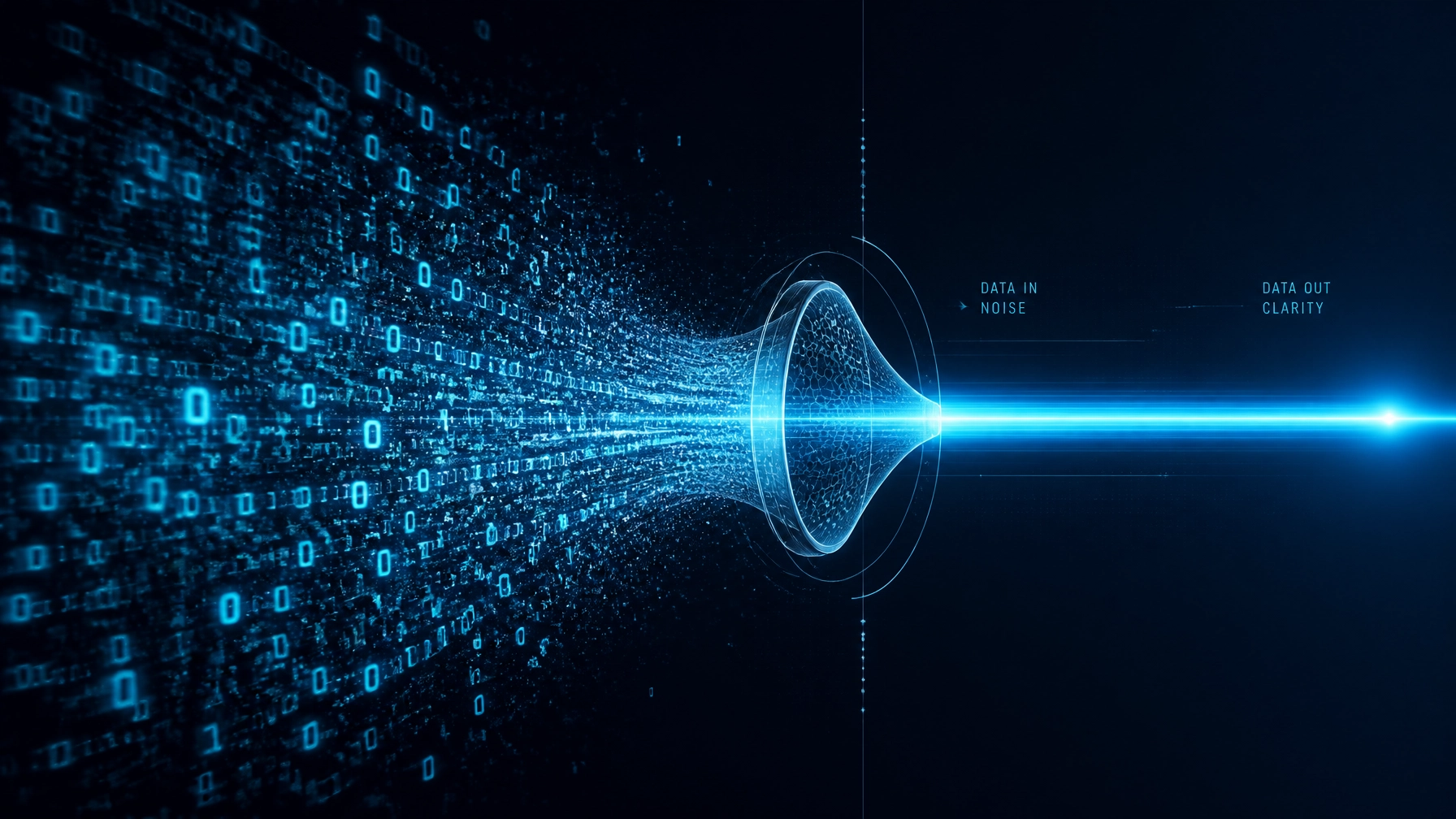
True innovation shouldn't be about how many pixels we can cram into a file; it should be about how much quality we can deliver using the least amount of data possible. This is the difference between a "Quantity-First" mindset and a "Quality-First" mindset.
A Quality-First mindset asks: What is the most efficient way to make this image look perfect to the human eye?
It involves better codecs, smarter compression, and independent benchmarks that prove a company is being a good steward of the world’s bandwidth. If a streaming service can deliver a 4K-quality experience using 30% less data through superior transmission technology, that is a massive win for the consumer and the environment.
Why Certification Matters
Right now, the consumer has no way of knowing if their favorite streaming service is being efficient or wasteful. There are no "nutrition labels" for data. You don't know if that 4K stream is a masterpiece of compression or a bloated, resource-heavy mess.
This is why the Data Transmission Efficiency Alliance is establishing the first independent certification system for video compression and data transmission. We want to recognize the organizations that are doing the hard work of optimizing their pipelines.
Our mission is to:
- Set Performance Benchmarks: What does "efficient" actually look like in 2026?
- Certify Technologies: Helping vendors prove that their codecs actually save data without sacrificing visual quality.
- Recognize Leaders: Highlighting the streaming services and data centers that are reducing their digital footprint.

The Path Forward: Choosing "Better" over "More"
The ethics of data demand that we stop chasing numbers for the sake of numbers.
As consumers, we should demand quality that we can actually see, not just specs on a box. As an industry, we need to move toward a model where "success" isn't measured by the petabytes delivered, but by the efficiency of that delivery.
The DTEA is here to lead that shift. We are building a world where data transmission is lean, purposeful, and honest. Because at the end of the day, "more" isn't better if it's just waste. Better is better.
If you are a streaming service, a data center operator, or a technology vendor committed to a more efficient digital future, it’s time to get involved. Let's stop the bloat and start the era of certified efficiency.