For the last decade, the tech world has been obsessed with one number: resolution. We went from SD to HD, then 4K, and now 8K is knocking on the door. Every marketing department at every major TV manufacturer and streaming service wants you to believe that more pixels always equal a better life.
But as we sit in 2026, we have to stop and ask: Is "more" actually better? Or are we just creating a massive, invisible problem for the planet and the people who live on it?
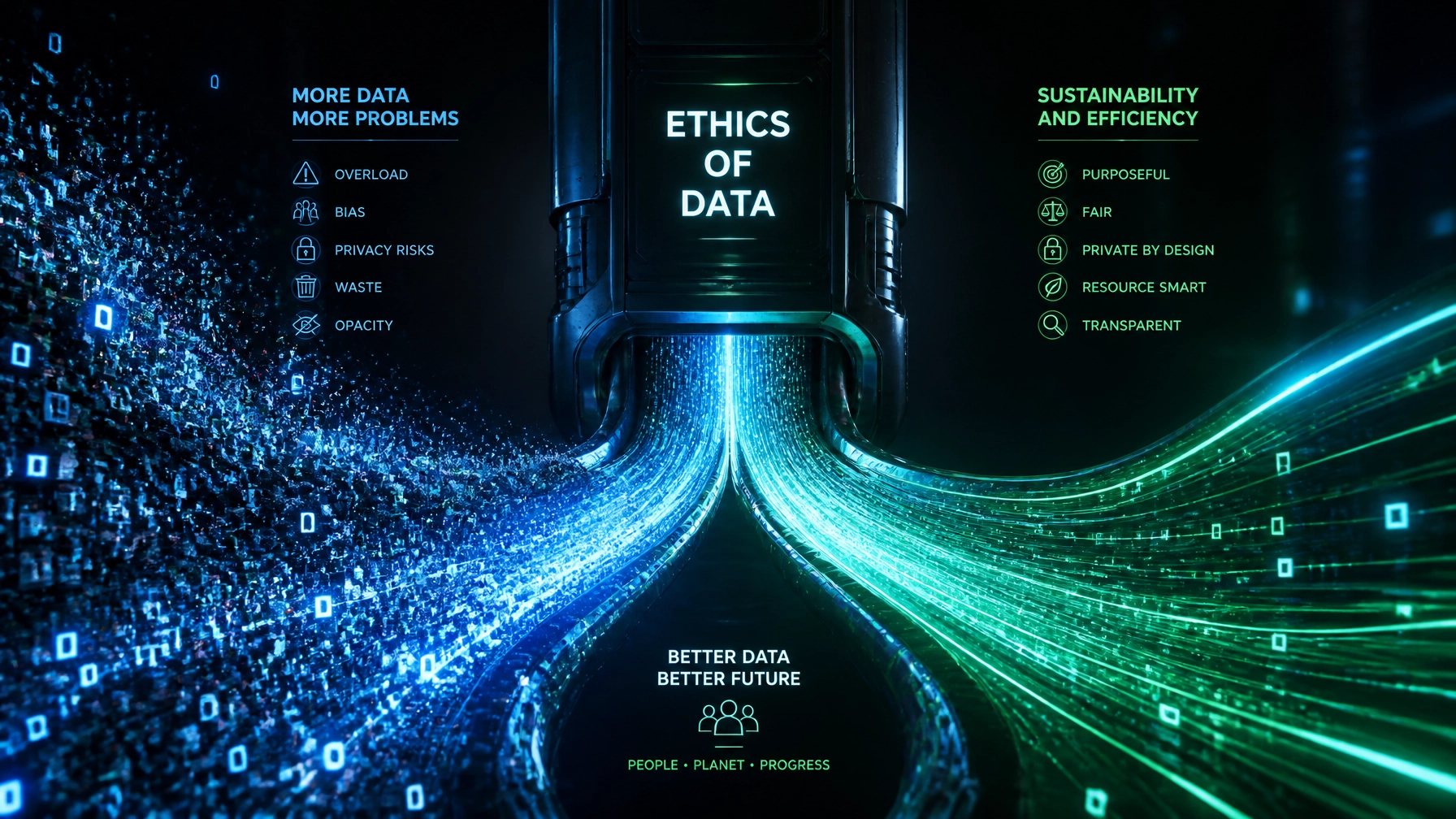
At the Data Transmission Efficiency Alliance (DTEA), we spend a lot of time thinking about the ethics of data. It’s not just about how fast a video loads; it’s about the cost of moving those bits across the globe. When we push for higher resolutions without considering efficiency, we aren’t just giving consumers a sharper picture: we’re making choices that affect the environment, digital equity, and even privacy.
The Hidden Carbon Footprint of Your 4K Binge-Watching
Let’s talk about the elephant in the room: energy. Every time you hit "play" on a 4K stream, you aren't just using the power in your TV. You are pulling data from a massive facility: a data center: miles away. That data has to travel through underwater cables, through neighborhood hubs, and finally through your router.

Video is now the dominant form of data on the internet. According to research on video coding efficiency, even small increases in bitrate scale into massive system-wide energy consumption. When a streaming service defaults everyone to the highest possible resolution, they are effectively choosing to burn more electricity.
If we don't use efficient codecs like HEVC (H.265) or the newer VVC (H.266), we are wasting power. These technologies can cut data usage by 50% without losing quality. From an ethical standpoint, choosing not to use these efficiencies is hard to justify when we know the impact on our climate.
The Perceptual Ceiling: When Is "More" Just Wasted?
Here is a truth the TV industry doesn't want you to know: your eyes have a limit.
There is a point where the human eye can no longer distinguish between resolutions. If you are watching 8K content on a 65-inch screen from ten feet away, your brain literally cannot see the extra detail. You are paying: in data costs and energy: for pixels that might as well not exist.

This is what we call "diminishing perceptual returns." When we push for resolutions that exceed human perception, we aren't serving the consumer; we are serving a marketing narrative. At DTEA.org, we believe the industry needs to focus on perceived quality rather than just raw numbers.
Why send an 8K stream to a smartphone? It’s a waste of the consumer's battery, a waste of their data plan, and a waste of the network's bandwidth. An ethical approach to data transmission means sending the right amount of data for the device and the viewer, not just the maximum amount.
Digital Equity: When "More" Shuts People Out
We often talk about the "Digital Divide," but we don't always talk about how data-heavy content makes it worse.

In many parts of the world, and even in rural parts of the US, high-speed fiber isn't a thing. People rely on expensive mobile data or slow satellite connections. When a streaming service optimizes only for high-resolution, high-bitrate streams, they are effectively pricing out and excluding millions of people.
Ethical data transmission is about accessibility. If a company uses a highly efficient codec, they can deliver a high-quality experience to someone with a mediocre connection. By prioritizing efficiency, we make information, education, and entertainment accessible to everyone, not just those with the fastest internet. Adaptive bitrate streaming is a great start, but it needs to be backed by industry-standard benchmarks that prioritize the low-end user as much as the 8K enthusiast.
The Privacy Paradox: The More We See, The More We Risk
There's another side to the "high-res" coin that gets very little attention: privacy.
Higher resolution doesn't just mean prettier movies. In the world of surveillance and AI-driven data analysis, higher resolution means more invasive profiling. When cameras capture every micro-expression and every detail of a person's gait, the potential for privacy abuse sky-rockets.
In contexts like healthcare or public safety, there is an ethical obligation to use the lowest resolution necessary to get the job done. If a medical professional can diagnose a patient using a 1080p stream, why capture and store a 4K stream that contains sensitive biometric data that isn't needed?
"Data minimization" is a core tenet of privacy. We should only collect, transmit, and store what we actually need. Pushing for "more" just because we can creates a massive honeypot of sensitive information that can be hacked, leaked, or misused.
Why the DTEA is Setting the Standard
At the Data Transmission Efficiency Alliance, we don't think the industry should be left to grade its own homework. This is why we are establishing the first independent certification system for video compression and data transmission.

Our goal is to create performance benchmarks that reward organizations for achieving superior efficiency. We want to recognize the companies that are doing the hard work of optimizing their streams, reducing their carbon footprints, and making their content accessible to everyone.
Certification isn't just a badge on a website; it's a commitment to a set of ethics. It tells the consumer, "We aren't just giving you more data; we're giving you better, smarter data."
Conclusion: Shifting from "More" to "Better"
The "more is always better" era is ending. It has to. Between the environmental costs and the social exclusion, the price of inefficient data is simply too high.
As we move forward, the winners in the streaming and data center industries won't be the ones who can pump out the most pixels. They will be the ones who can deliver the best experience with the smallest possible footprint.
The ethics of data demand that we stop chasing numbers and start chasing efficiency. It's time to build a digital world that is high-quality, sustainable, and inclusive for everyone.
Check out how we are making this happen at DTEA.org and join the alliance to help set a new standard for the future of transmission.